Understanding Lymphedema: More Than Just Swelling

Updated: May 25
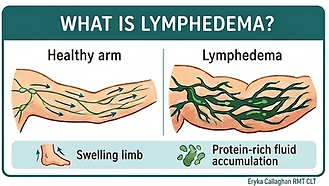
When we think about our body’s circulatory system, we often focus on the heart and blood vessels. However, there is a "silent partner" working in the background called the lymphatic system. This network of vessels and nodes acts like a specialized drainage system, filtering waste and managing fluid balance. When this system is damaged or blocked, a chronic condition known as lymphedema can develop.
Lymphedema is characterized by the accumulation of protein-rich fluid in the body's tissues, most commonly in the arms or legs, leading to persistent swelling, inflammation, and eventual tissue changes (Larsen et al., 2025; StatPearls, 2026).
Why Does It Happen?
Lymphedema is generally categorized into two types based on its cause:
Primary Lymphedema: This is often the result of genetic factors where a person is born with an underdeveloped or missing lymphatic system. While it can appear at birth, it sometimes remains "dormant" until puberty or adulthood (StatPearls, 2026).
Secondary Lymphedema: This is far more common and occurs when the system is damaged by outside forces. Globally, the leading cause is a parasitic infection (filariasis), but in developed nations, it is most frequently a side effect of cancer treatment (Larsen et al., 2025).

For example, roughly 30% of breast cancer survivors develop breast cancer-related lymphedema (BCRL) within two years of surgery or radiation (Measuring What Matters, 2026). These treatments can obstruct the "drainage pipes" of the body, causing fluid to back up like a clogged sink.
Recognizing the Early Warning Signs
One of the biggest challenges with lymphedema is that it can be "subclinical"—meaning the damage is happening under the surface before you can actually see any swelling (StatPearls, 2026).
Early symptoms often include:
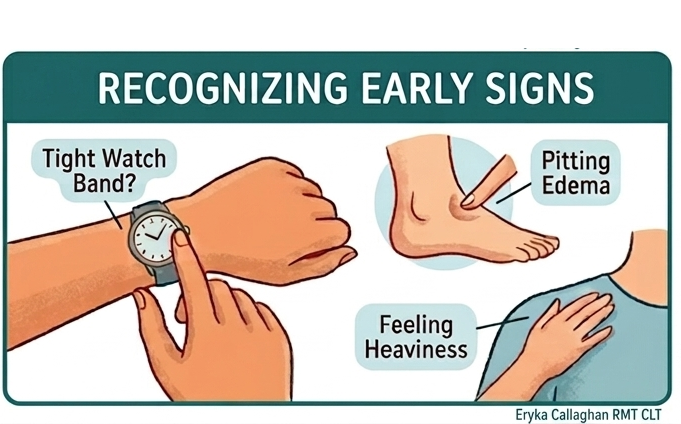
A feeling of heaviness or tightness in a limb.
Jewelry or clothing (like a watch or shoes) feeling unexpectedly snug.
Reduced flexibility in the wrist, ankle, or neck.
Pitting: When you press your finger into the swollen area, it leaves an indentation that takes a few seconds to disappear (StatPearls, 2026).
Modern Management and Treatment
While there is currently no "cure" for lymphedema, it is a highly manageable condition. The goal of treatment is to reduce swelling and prevent the tissue from becoming "fibrotic" (hardened).
The Gold Standard: CDT
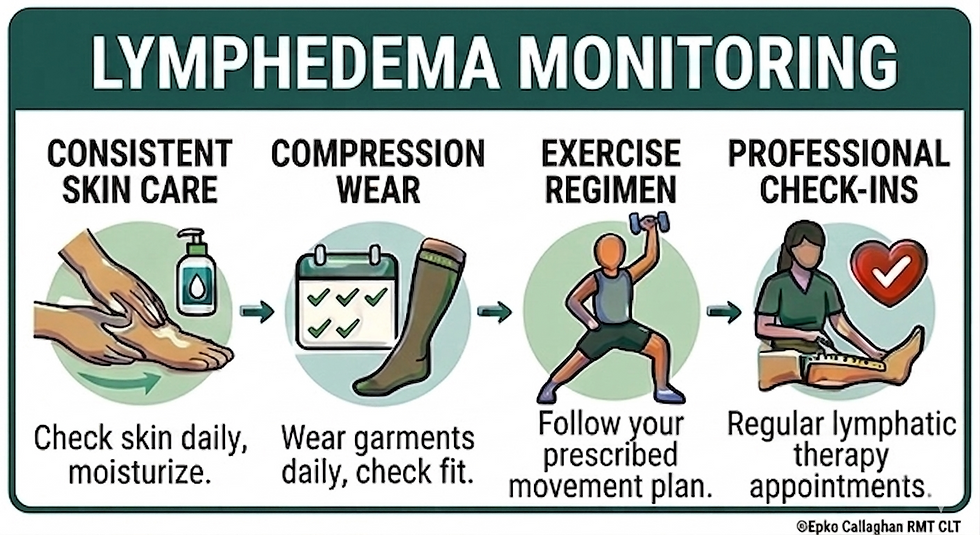
The primary treatment is Complete Decongestive Therapy (CDT). This is a multi-pronged approach that includes:

Manual Lymphatic Drainage (MLD): A specialized, very gentle massage technique that helps "push" fluid toward working lymph nodes (Quality of Life Outcomes, 2025).
Compression: Using bandages or custom-fitted garments to keep fluid from flowing back into the limb.
Exercise: Targeted movements that use the body’s muscles as a natural pump for the lymphatic vessels (Frontiers in Oncology, 2026).
Skin Care: Meticulous hygiene is vital because lymphedema increases the risk of skin infections like cellulitis, which can further damage the lymphatic system (StatPearls, 2026).
Surgical Innovations
For those who do not find relief through conservative therapy, surgical options have advanced significantly. Procedures like Lymphaticovenous Anastomosis (LVA)—where surgeons essentially "bypass" blockages by connecting tiny lymphatic vessels directly to veins—are becoming more common (Integrated Surgical Treatment, 2026).
Important Considerations
Important considerations while living with lymphedema is managing flare-ups and avoiding infection. This can be done by wearing compression as much as possible, but especially while flying, long car trips and periods of prolonged inactivity. Compression should also be worn when exercising, or any activity that increases your heart rate.
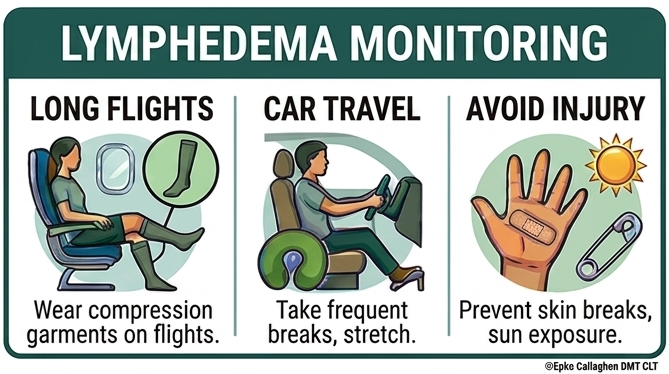
People with lymphedema should avoid lifting heavy objects on their lymphedema side. As well as being cautious of any cuts, burns or injuries to the affected limb.
Cellulitis - a potentially serious bacterial skin infection that causes redness, swelling, and pain in the infected area - is an extra risk to people living with lymphedema. The extra fluid in the limb, makes it difficult for the immune system to fight the infection.
The Path Forward
Living with lymphedema is about more than physical management; it also impacts mental health. Studies show that patients with moderate to severe symptoms often experience higher rates of depression and lower health-related quality of life (Larsen et al., 2025).
The key to a good prognosis is early detection. If you have undergone surgery or radiation involving your lymph nodes, regular screening using tools like Bioimpedance Spectroscopy (BIS) can catch fluid changes before they become visible, allowing for earlier, more effective intervention (Frontiers in Oncology, 2026).
Reach out to with questions, or to make an appointment today
Eryka Callaghan, RMT CLT - 613-576-3771
References
Frontiers in Oncology. (2026). Comprehensive overview of management and risk assessment of breast cancer-related lymphedema: a multidisciplinary approach. Frontiers in Oncology.
Integrated Surgical Treatment. (2026). Integrated surgical treatment: a new model for treating secondary extremity lymphedema based on algorithms. PMC.
Larsen, G. S., Johansen, C., Von Heymann, A., & Rafn, B. S. (2025). Prevalence of lymphedema symptoms across cancer diagnoses and association with depression, pain interference and health-related quality of life. Acta Oncologica, 64, 87–95. https://doi.org/10.2340/1651-226x.2025.42203 Cited by: 6
Measuring What Matters. (2026). Measuring what matters for breast cancer survivors: Translation, cross-cultural adaptation and validation of the Croatian version of lymphedema quality of life tool-arm. PMC.
Quality of Life Outcomes. (2025). Quality of life outcomes in lower extremity lymphedema after manual lymphatic drainage therapy. Bagcilar Medical Bulletin.
StatPearls. (2026). Lymphedema. StatPearls - NCBI Bookshelf.
Comments